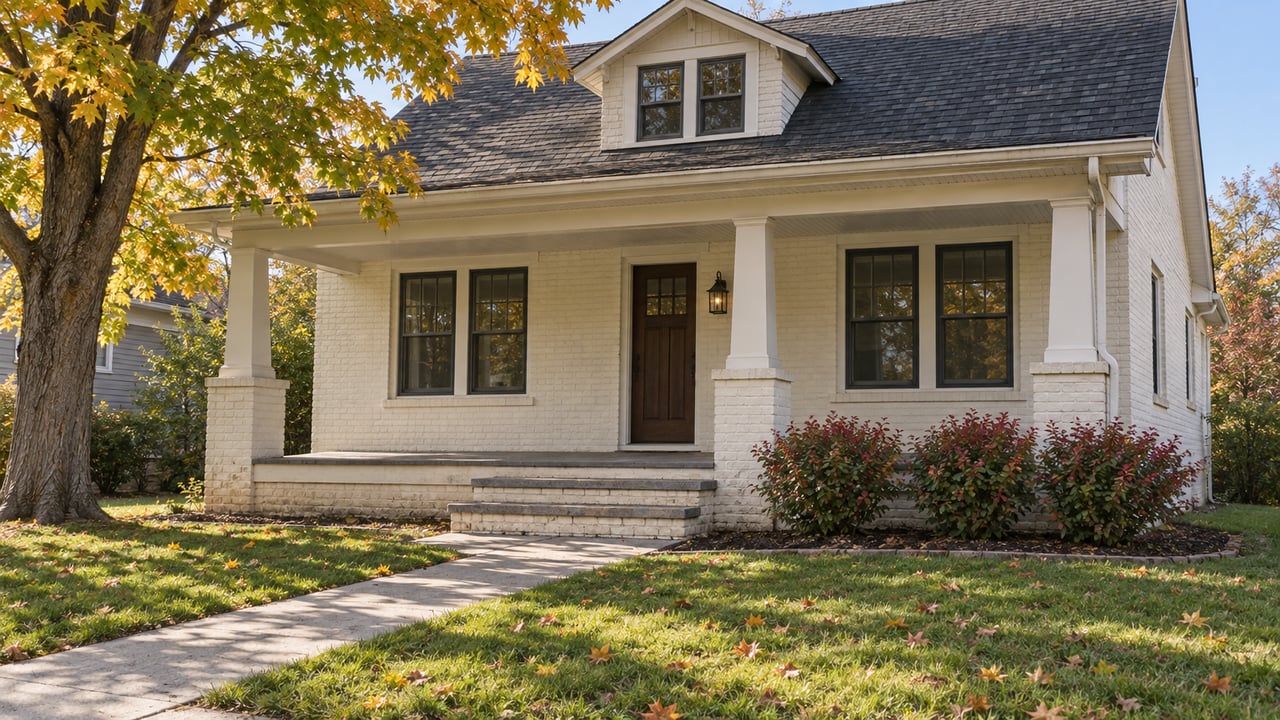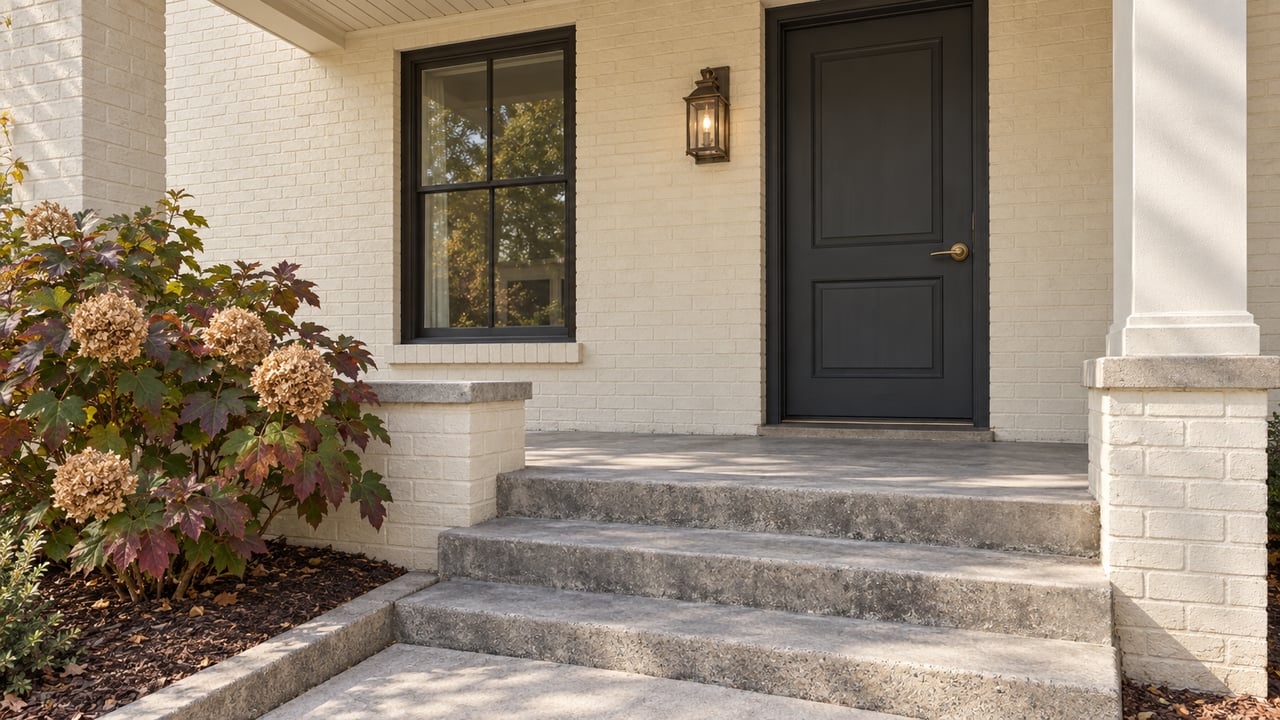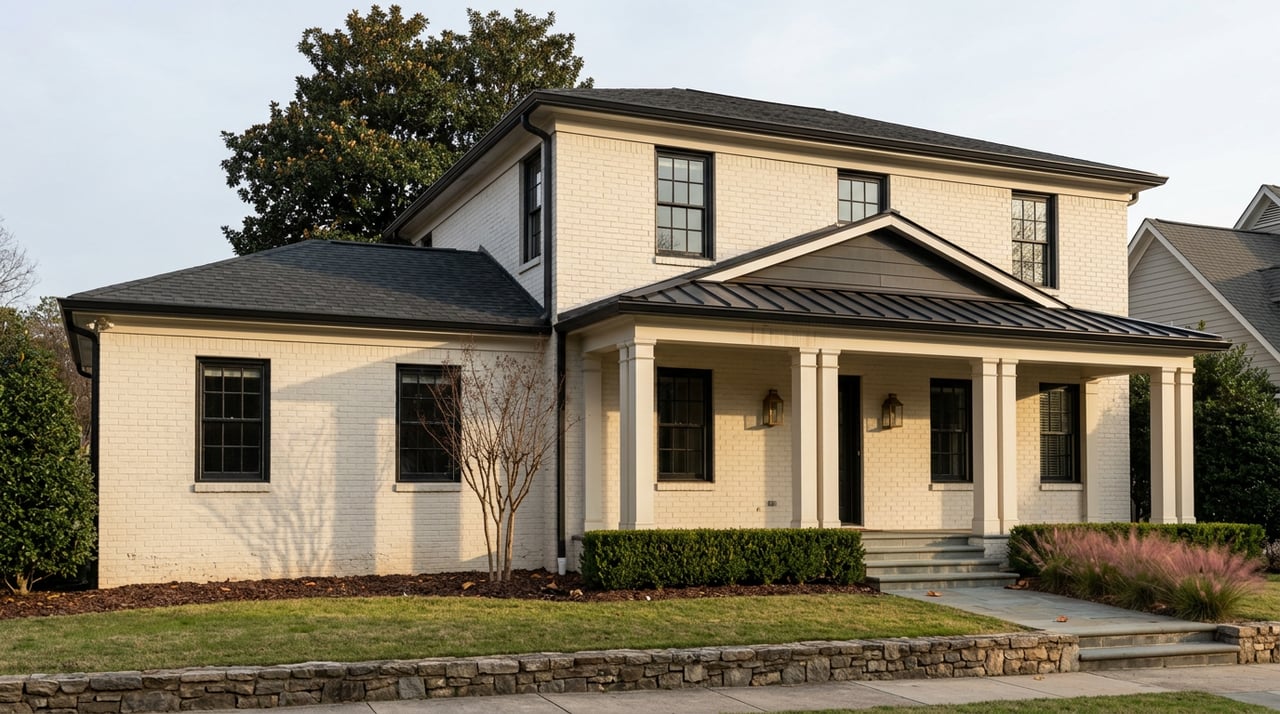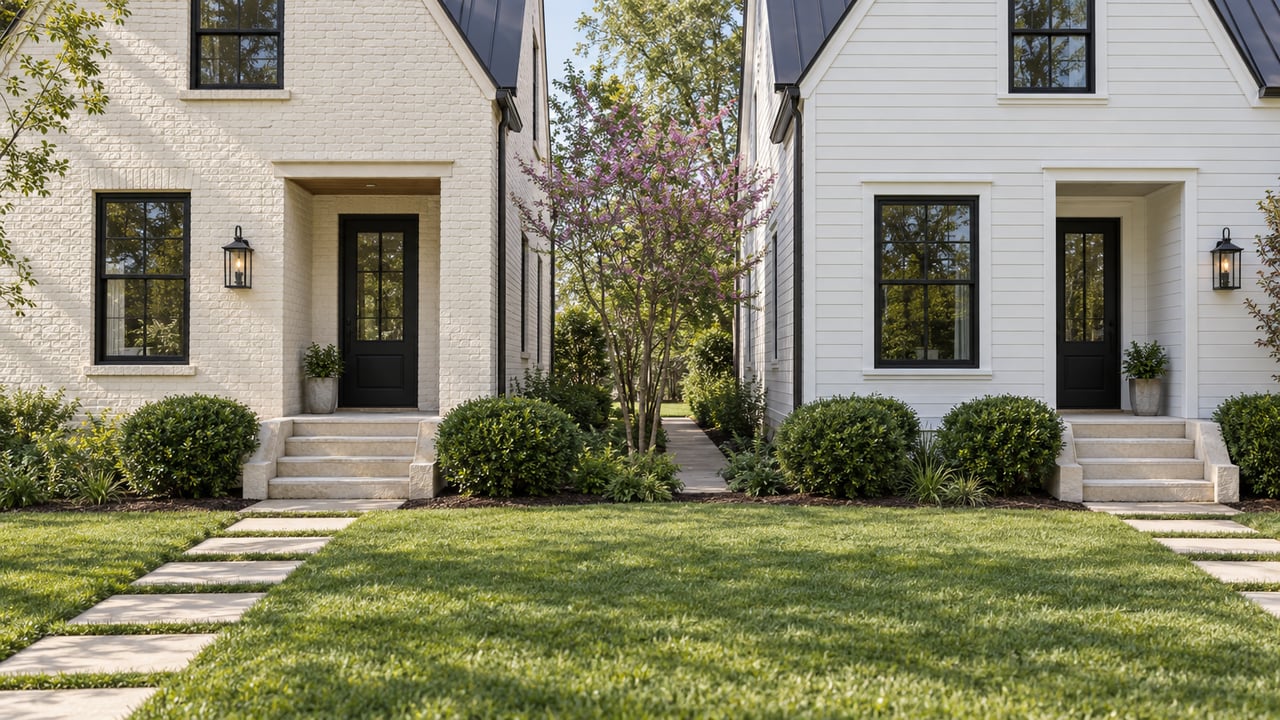
Walk two blocks off Golf Club Lane in Green Hills and you can find a pair of new-construction homes that look like siblings. Same white-painted brick, same black window trim, same builder-grade brass hardware, same price bracket. One sits on its own parcel, deeded and taxed as a single lot. The other shares its lot, on paper, with the house eighteen feet away. Nothing on the yard sign says which is which. The difference only shows up when a lender pulls the collateral file or an appraiser goes looking for comparable sales.
That difference is a legal structure called a Horizontal Property Regime, and in Green Hills right now it applies to roughly three of every ten homes that have closed over the past year. Understanding what it actually changes, not just that it exists, is the part that matters before an offer goes in.
The word doing the hiding
"Detached" describes what a house looks like from the street. It says nothing about who owns the ground beneath it. Tennessee's Horizontal Property Act lets a developer take one parcel that used to hold a single house and record a master deed splitting it into two or more separately owned homes, without going through the city's subdivision process. Each home gets its own deed and its own tax bill. The land under both homes, and often the driveway, side yard, or shared retaining wall between them, may be treated as commonly owned property governed by a homeowners' association, whether or not that association ever collects a monthly fee.
According to McSeveney Law, an attorney has to certify the master deed before it can be recorded, and Tennessee law, as Felix Homes explains, requires a minimum six feet of separation between the two structures for the arrangement to qualify as a detached HPR rather than an attached one. That is the whole mechanism. It was built to be fast: developers can typically get a Horizontal Property Regime approved in about a week for roughly $2,000 in legal and filing costs, according to a policy analysis from the Mercatus Center, compared to the months and public hearings a formal subdivision requires. Speed is the entire reason it spread through Nashville's infill neighborhoods in the first place. Mercatus estimates the structure has enabled more than 20,000 for-sale homes across the city since 2010.
Where it shows up in Green Hills
Green Hills came to this later than East Nashville or 12 South, where tall-and-skinny HPR pairs have been standard for over a decade. Here, the housing stock still runs from 1920s cottages to mid-century ranches to new construction pushing past nine million dollars, and teardown-rebuild activity has concentrated on infill lots along streets like Estes Road, Golf Club Lane, and the newer construction clustering near the Forest Hills line. Over the most recent rolling twelve-month period, close to 400 homes closed in Green Hills, and traditional site-built houses made up about seven in ten of those sales. The remaining three in ten were HPR-detached homes, meaning the buyer purchased a house that looks fully independent but legally shares its lot with the neighboring structure.
That split matters because nothing in the MLS photos or the square footage count tells you which category a given new-construction listing falls into. You have to ask, or wait for it to surface in the title work.
Why the lender cares which kind of "detached" it is
The whole design intent behind Tennessee's HPR statute was to let buyers finance these homes with a conventional mortgage instead of a condo loan, since condo financing carries its own layer of underwriting and can be harder to secure. On paper, that intent holds. In practice, some lenders and appraisers still treat an HPR purchase more cautiously than a fee-simple single-family sale, because the recorded declaration may, as Rochford Lawyers explains, leave the collateral with an undivided interest in land shared with another owner rather than a clean, sole-owned parcel.
That caution shows up two ways. First, in the comps: an appraiser working a Green Hills HPR sale may pull from a thinner pool of directly comparable HPR closings rather than the broader set of traditional sales on the same street, which can pull the valuation in either direction depending on how those comps performed. Second, in resale exposure: because the neighboring unit sits on the same recorded parcel, its condition and upkeep can influence how your home shows and how it appraises, in a way that a true independent lot does not carry.
What the master deed says about shared land
Every HPR master deed answers one question that never makes it into a listing description: does the association own the land under both homes, or does each owner individually hold title to the land beneath their own unit? The answer sits in the recorded declaration, not in the marketing materials.
There is also a smaller, easy-to-miss detail. According to Wendy Monday, an HPR association has to file a nominal annual renewal with the state, around $100 a year, to stay active. Owners let it lapse more often than you would expect. For a fully detached pair with no shared driveway or party wall, a lapsed filing usually causes no immediate problem. For anything with shared elements, an inactive association can complicate the insurance conversation right when a claim needs to be filed.
What the price per square foot is actually measuring
Green Hills new construction has been clearing close to $700 a square foot in recent closings, while entry-tier homes in the neighborhood trade closer to $384 a square foot. That spread reflects new-build quality and premium lots, but it does not distinguish between fee-simple new construction and HPR-detached new construction. Both categories get folded into the same "new construction" bucket in most public market summaries.
That blending matters because the two categories have not appreciated the same way. Looking at price-per-square-foot appreciation across Nashville's infill market over the past five years, traditional fee-simple single-family homes gained roughly 34 percent, attached HPR units gained roughly 22 percent, and detached HPR units gained roughly 18.5 percent over that same stretch. Paying new-construction pricing for a detached HPR home in Green Hills buys the same finish level and curb appeal as a fee-simple home at that price point, but it has not historically carried the same appreciation trajectory. That is not a reason to avoid an HPR purchase. It is a reason to know which category you are buying before you anchor your resale expectations to the price per square foot alone.
Questions worth asking before you write or accept an offer
- Does the recorded master deed show the association owning the land in common, or does each owner individually hold title to the land beneath their unit?
- Is the HPR's state filing current, and if not, has the $100 annual renewal ever lapsed?
- How is the lender's underwriter classifying the collateral, and does that classification match how the appraiser is pulling comps?
- What comparable sales did the appraisal actually use, fee-simple or HPR?
- Who is responsible for insuring shared elements like a driveway, retaining wall, or side yard, and is that spelled out in the declaration or left ambiguous?
A short FAQ
Is an HPR home in Green Hills less expensive than a comparable fee-simple home? Not necessarily at the point of sale. The gap shows up more in appreciation over time than in the initial asking price, based on five-year price-per-square-foot trends across Nashville's infill market.
Can I still get a conventional mortgage on an HPR-detached home? That was the statute's design intent, and it is why HPRs spread quickly across the city. Some lenders apply extra scrutiny at underwriting because of the shared-land structure, so it helps to work with a lender who has closed HPR purchases before.
Does a detached HPR home come with an HOA fee? Not automatically. Many detached HPR arrangements carry no monthly assessment, only the entity's nominal annual state filing. Attached units or those with shared systems are more likely to need an active, funded association.
Stephanie Lowe spends as much time inside master deeds and construction documents as she does inside listing appointments, a byproduct of running her own development and construction work through L & S Development and Bluegrass Construction alongside her brokerage practice at Zeitlin Sotheby's International Realty. If you are comparing new construction in Green Hills and want a second read on what a specific master deed actually says before you write an offer, Stephanie Lowe can walk through it with you.
This article is general information, not legal, tax or financial advice. Consult a qualified professional about your situation.